Step 3: Prepare The Vial
- Take the vial out of storage as your pharmacy instructed.
- Inspect the liquid again. Do not shake the vial.
- Wipe the rubber stopper with an alcohol swab and let it air-dry.
- Do not touch the stopper after cleaning it.
Injection Guide
The most important part of a GLP-1 injection is drawing the right amount for your vial's concentration. Technique matters too, but a correct dose comes first.
Semaglutide and tirzepatide are usually injected once a week, on the same day each week. Liraglutide is injected once a day. Always follow the schedule your healthcare provider prescribed.
If your GLP-1 medication comes in a multi-dose vial, you draw your dose into a syringe before each injection. Your provider or pharmacy should show you how to measure your specific dose before your first injection. This guide walks through each step so you know what to expect.
Set everything out on a clean, dry surface before you start.
Keep the vial and supplies away from children and pets. Wash your hands with soap and water, then dry them with a clean towel.
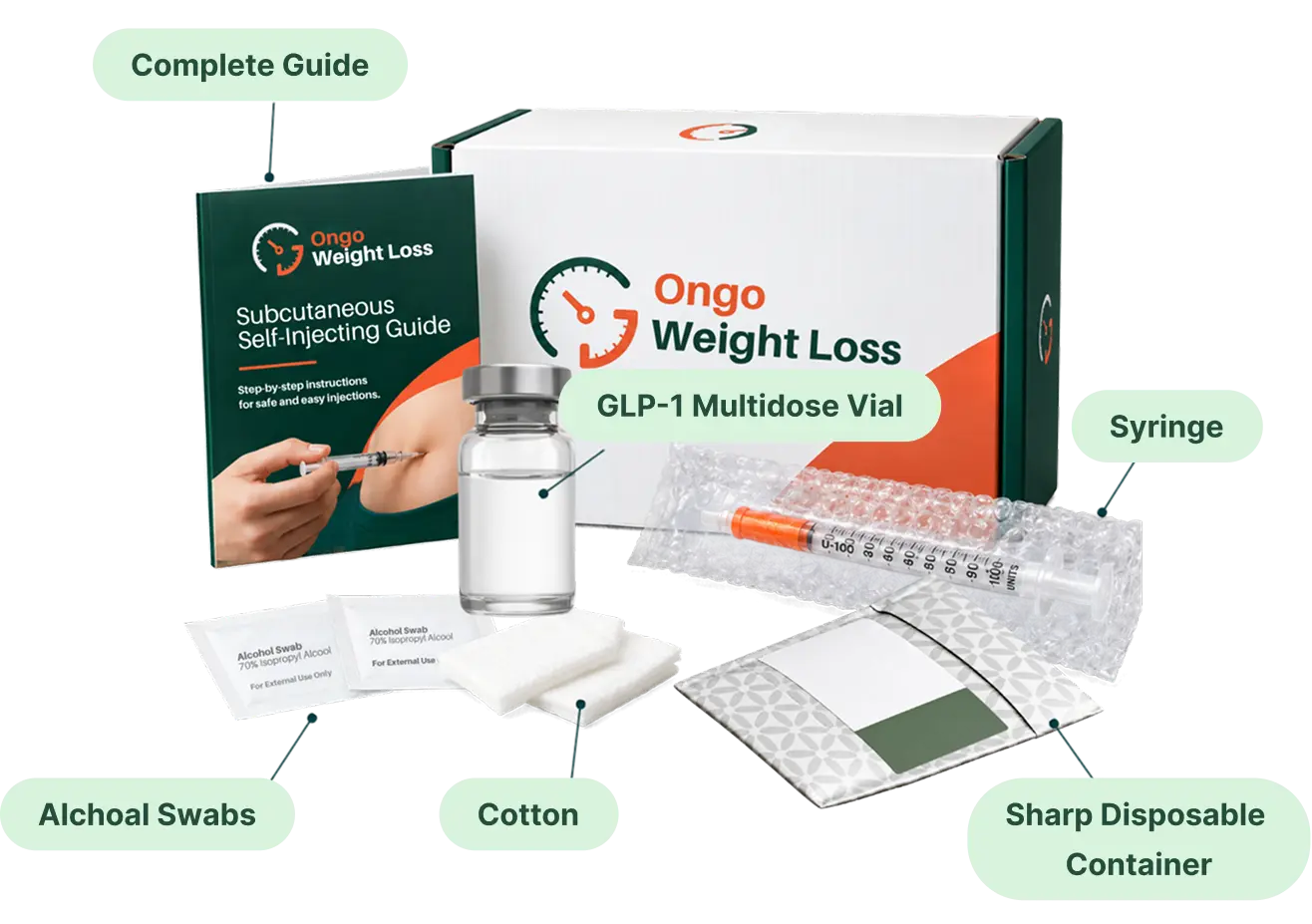
Take a moment to inspect the vial before you prepare your injection.
Check the label. Confirm that:
Check the liquid. Do not use the vial if you notice:
Different formulations can look different, so compare against the instructions for your specific medication. If you think the vial was stored incorrectly, contact your provider or pharmacy before using it.
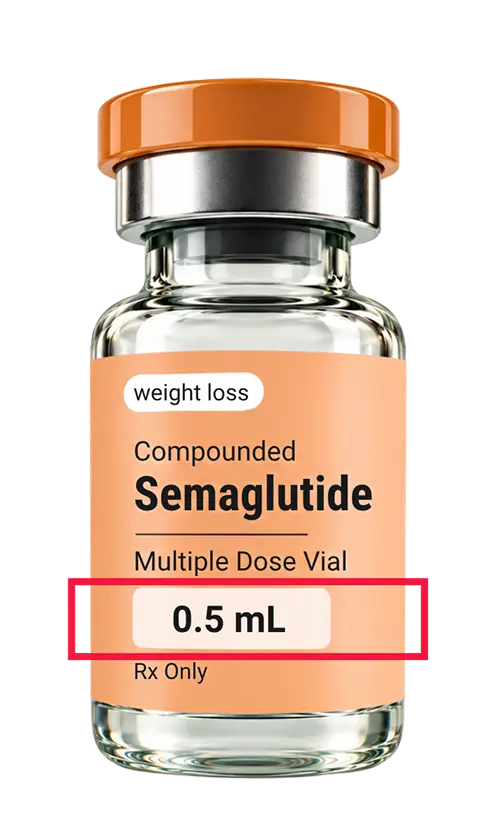
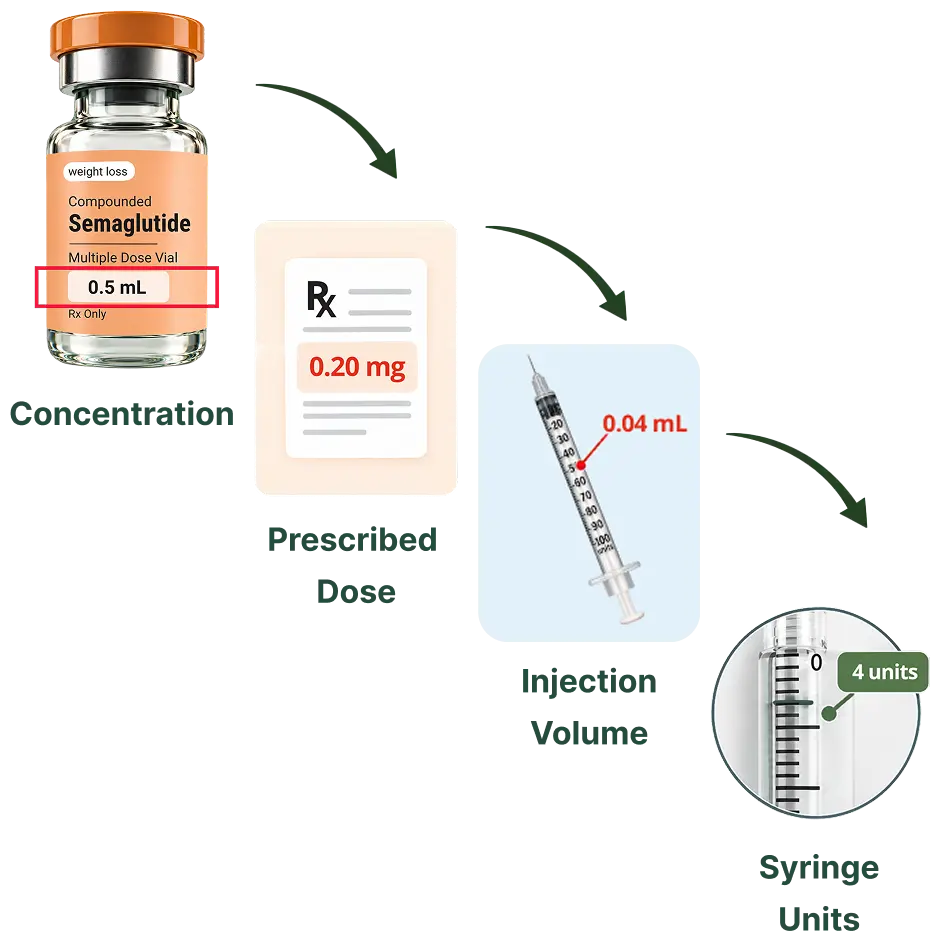
Confirm exactly how much medication you have been prescribed before you pick up the syringe. Your prescription gives a dose in milligrams (mg), but you measure volume on the syringe. Dose and volume are not the same thing.
For example, a prescription of 0.20 mg semaglutide once weekly does not mean 20 units on your syringe. The amount you draw depends on the concentration of your vial.
The 0.5 mL vial from the Ongo Weight Loss Program contains 5 mg/mL of semaglutide. To get 0.20 mg, you draw 0.04 mL (0.20 mg ÷ 5 mg/mL). On a U-100 insulin syringe, 0.04 mL equals 4 units.
This conversion applies only to that concentration and a U-100 syringe. Always use the dosing instructions supplied with your medication.
For example, if your dose is 0.04 mL (4 units), draw 4 units of air. Pushing this air into the vial makes the medication easier to withdraw.
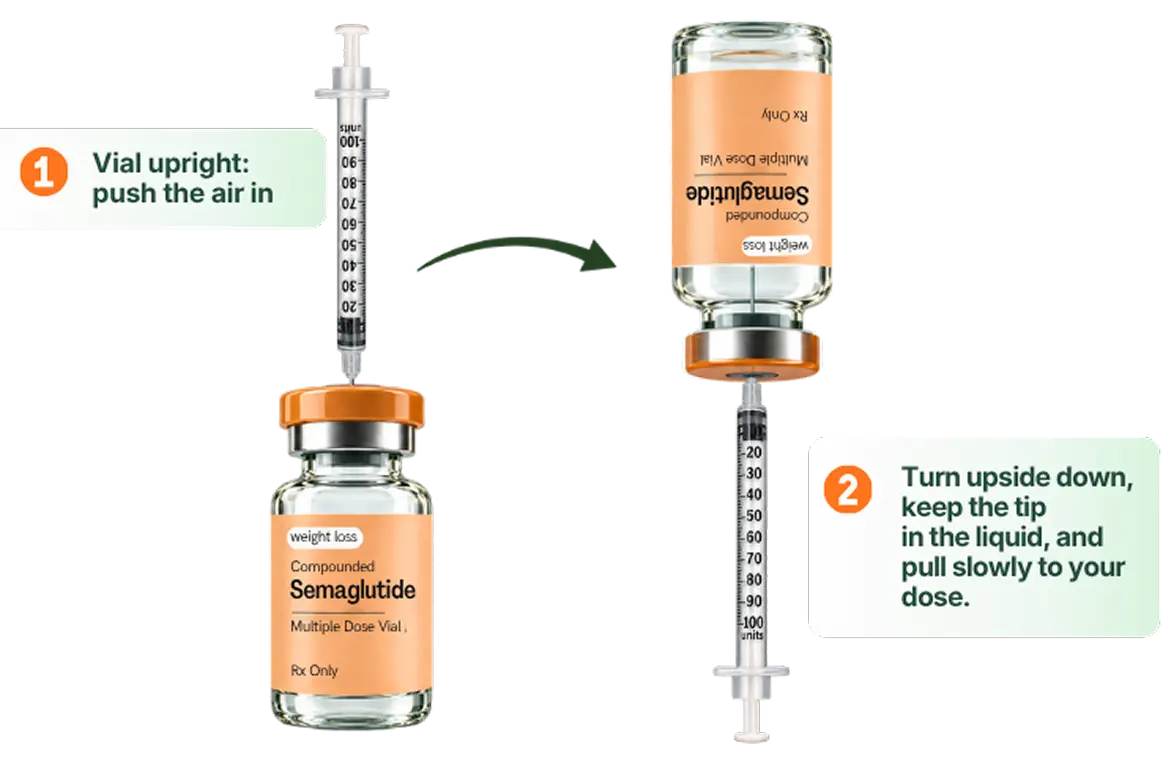
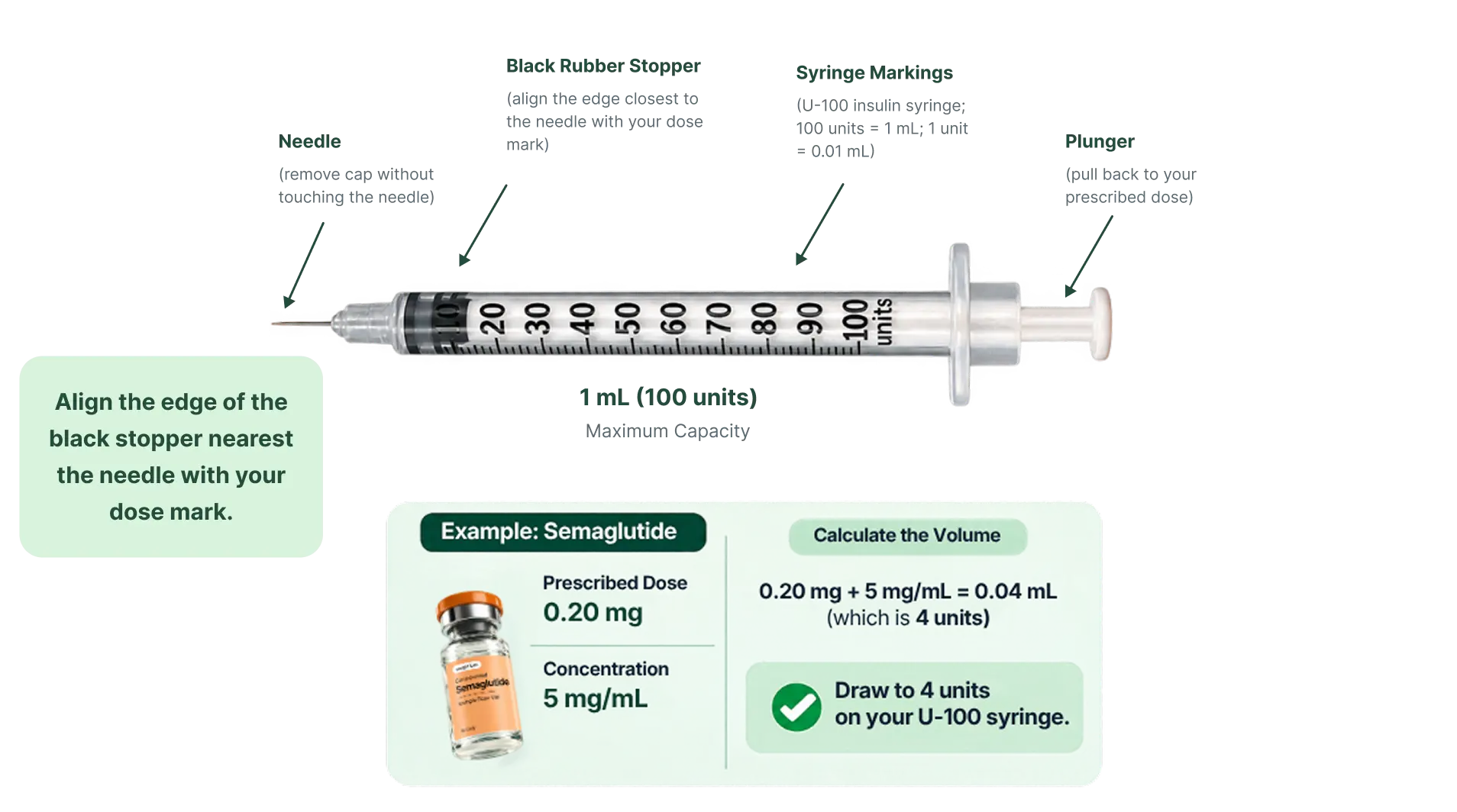
On a U-100 insulin syringe, 100 units correspond to 1 mL. A 30-unit U-100 syringe has a maximum capacity of 0.3 mL, but the size of its smallest markings varies by model.
When reading the syringe, align the edge of the black rubber stopper closest to the needle with the prescribed marking. Do not assume that every small tick represents half a unit; check the graduations on your particular syringe.
For the example above, the prescribed volume is 0.04 mL, equivalent to 4 units on a U-100 syringe. Use this marking only if your prescription, vial concentration, and pharmacy instructions match the example.
Inspect the syringe for air bubbles and follow your pharmacy's instructions for removing them. If you are unsure how to remove a bubble without changing the dose, ask your pharmacist or healthcare provider for guidance.
Never increase or change your prescribed dose to compensate for an air bubble.
Once the medication is drawn up, verify the measurement against your prescribed instructions before proceeding. Use the prepared syringe promptly as directed, and follow the supplied instructions for safe needle handling and disposal. Never reuse a syringe or needle.
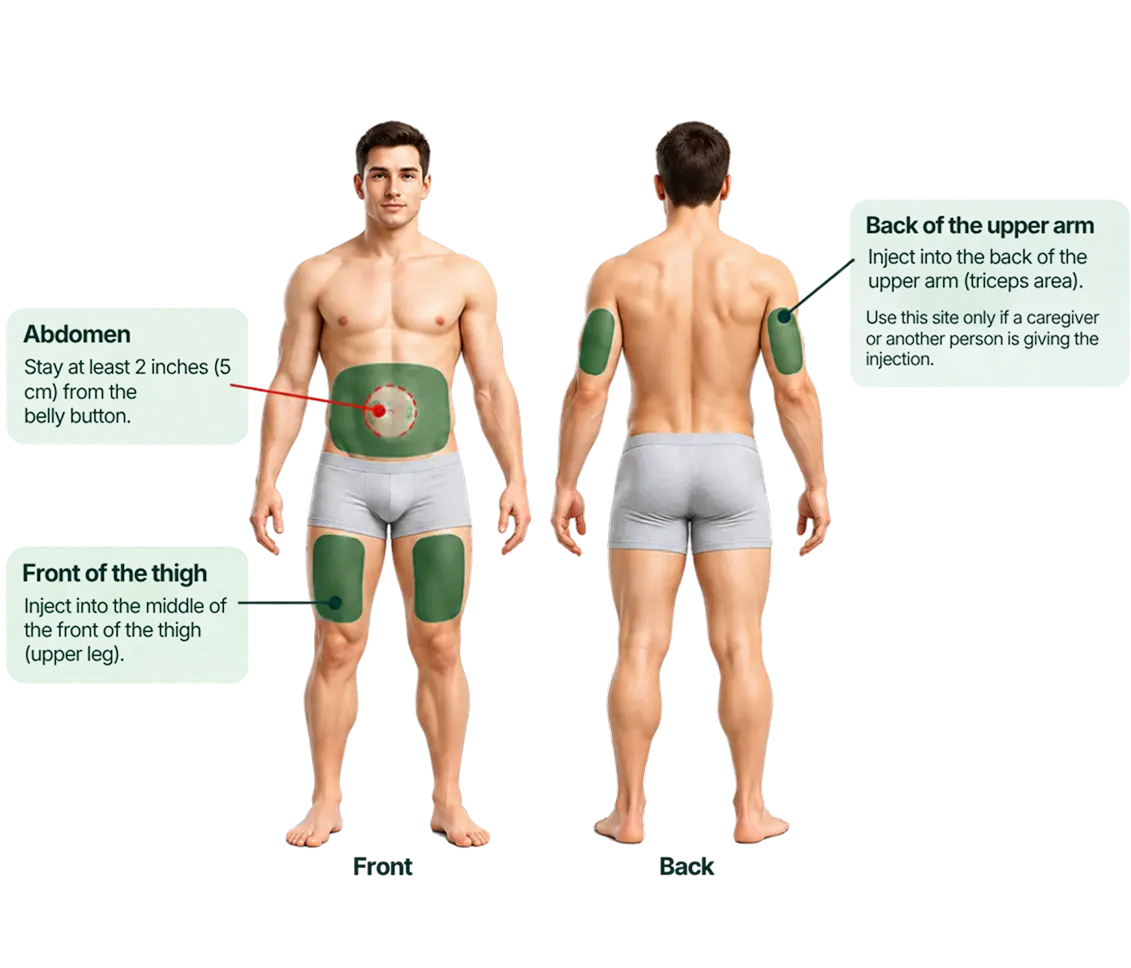
GLP-1 medication is injected subcutaneously, into the fatty tissue just under the skin.
Common injection sites:
Rotate sites from week to week. Within the same area, keep each injection at least 1 inch (2.5 cm) from the last one. Do not inject into skin that is bruised, red, swollen, tender, scarred, irritated or hardened. Do not inject through clothing.
Most adults using a short insulin syringe insert the needle straight in, at a 90° angle. If you are very lean, your provider may ask you to pinch the skin or use a 45° angle.
If there is a small amount of bleeding, press gently with gauze or a cotton ball. Do not rub the site.
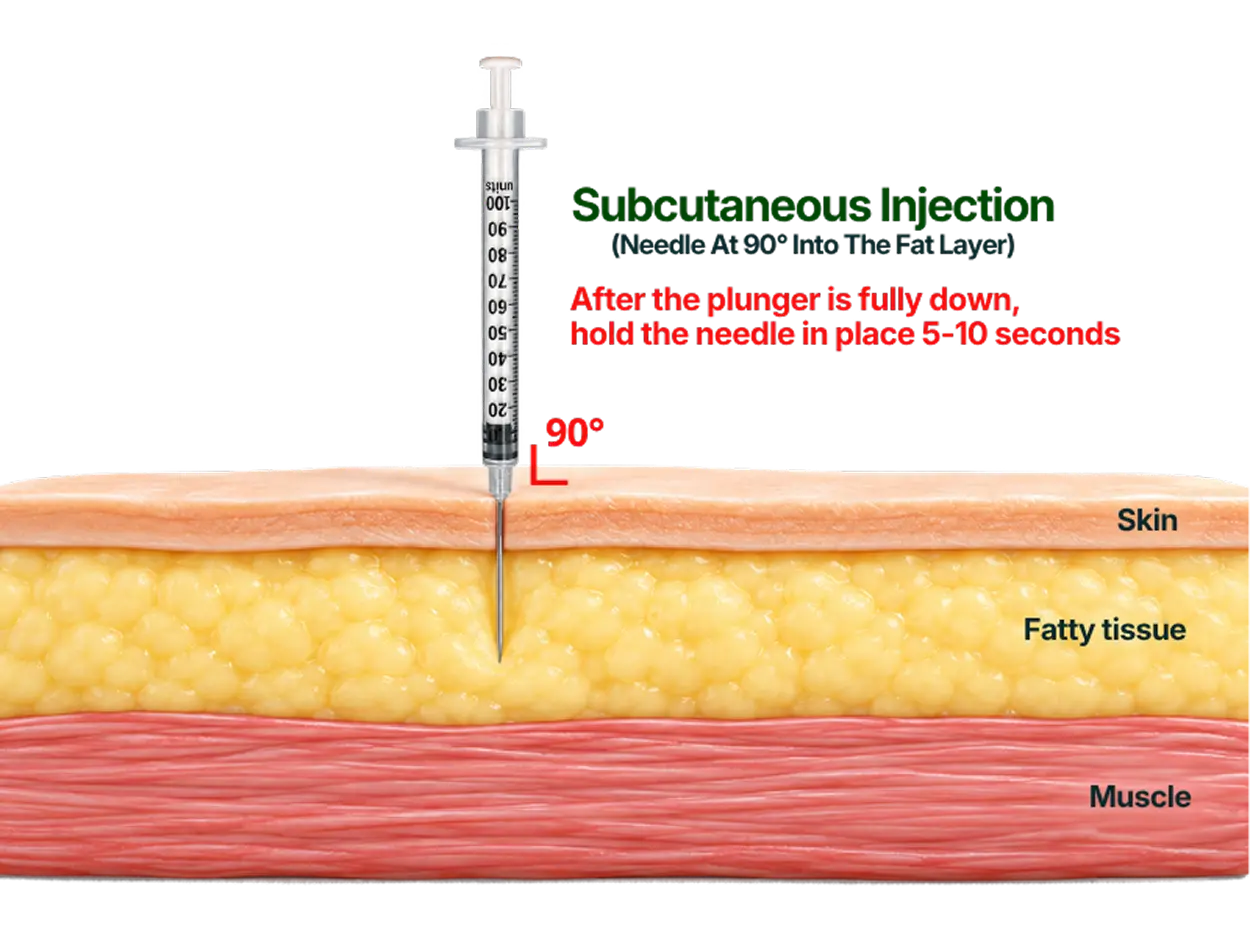
Use a new needle and syringe every time, and never reuse or share them.
After each injection, note the date, the number of units and the site you used. This helps you rotate sites and keep a steady schedule.
Stop and check before injecting. This matters most with compounded GLP-1 medications, because two vials can hold different amounts of medication per mL. The same dose can then need different syringe volumes.
Do not work out your dose from an online example alone. Check that these four things match:
If they do not clearly match, contact your provider or dispensing pharmacy before injecting.
Follow the storage instructions supplied with your specific medication. Most compounded vials are kept in the refrigerator at 36–46°F (2–8°C), but your pharmacy's instructions come first.
If the medication has been frozen, exposed to the wrong temperature or stored differently from the instructions, contact your pharmacy before using it.
Missed-dose rules depend on the medication and how long it has been since your scheduled day. Check your medication's instructions or ask your provider or pharmacist.
Do not double your next dose to make up for a missed one.
The most common side effects are nausea, vomiting, diarrhea, constipation, reduced appetite and mild redness or itching at the injection site. These are often strongest after starting or increasing a dose. Eating smaller meals and drinking enough fluids can help.
Tell your provider if side effects are severe or do not ease. Also tell them if you take insulin or a sulfonylurea, since GLP-1 medications can raise the risk of low blood sugar with these.
Semaglutide and tirzepatide carry an FDA boxed warning about thyroid C-cell tumors. Do not use them if you or a family member has had medullary thyroid cancer, or if you have multiple endocrine neoplasia type 2 (MEN 2).
Tell your provider if you are pregnant, planning a pregnancy or breastfeeding. Also tell them about any history of pancreatitis, gallbladder disease or kidney problems.
Compounded GLP-1 medications are prepared by licensed pharmacies and are not FDA-approved. See eligibility criteria
Contact your provider if you have concerning symptoms after an injection, or if you are unsure about your dose or technique.
Get urgent medical help for:
The most important part of a GLP-1 injection is drawing the right amount for your vial's concentration and your prescribed dose.
If you are ever unsure whether to inject 4 units, 10 units, 20 units or another amount, stop. Confirm the calculation with your provider or dispensing pharmacy before injecting.
U.S. Food and Drug Administration (FDA). FDA Alerts Health Care Providers, Compounders and Patients of Dosing Errors Associated With Compounded Injectable Semaglutide Products.
https://www.fda.gov/drugs/human-drug-compounding/fda-alerts-health-care-providers-compounders-and-patients-dosing-errors-associated-compoundedU.S. Food and Drug Administration (FDA). FDA's Concerns With Unapproved GLP-1 Drugs Used for Weight Loss.
https://www.fda.gov/drugs/drug-alerts-and-statements/fdas-concerns-unapproved-glp-1-drugs-used-weight-lossCenters for Disease Control and Prevention (CDC). Safe Injection Practices and Your Health.
https://www.cdc.gov/injection-safety/about/Centers for Disease Control and Prevention (CDC). Preventing Unsafe Injection Practices.
https://www.cdc.gov/injection-safety/hcp/clinical-safety/index.htmlCenters for Disease Control and Prevention (CDC). Injection Safety Checklist.
https://www.cdc.gov/injection-safety/media/pdfs/Safe-Injection-Checklist-P.pdfU.S. Food and Drug Administration (FDA). Wegovy (semaglutide) Prescribing Information.
https://www.accessdata.fda.gov/drugsatfda_docs/label/2026/218316s007lbl.pdfEli Lilly and Company. Zepbound (tirzepatide): Dosing, How to Use and How to Inject.
https://zepbound.lilly.com/weight/how-to-useEli Lilly and Company. Zepbound (tirzepatide) Instructions for Use.
https://pi.lilly.com/us/zepbound-pen-us-ifu.pdfU.S. Food and Drug Administration (FDA). Do's and Don'ts of Proper Sharps Disposal.
https://www.fda.gov/medical-devices/safely-using-sharps-needles-and-syringes-home-work-and-travel/dos-and-donts-proper-sharps-disposalU.S. Food and Drug Administration (FDA). Sharps Disposal Containers.
https://www.fda.gov/medical-devices/safely-using-sharps-needles-and-syringes-home-work-and-travel/sharps-disposal-containersU.S. Food and Drug Administration (FDA). Understanding the Risks of Compounded Drugs.
https://www.fda.gov/drugs/human-drug-compounding/understanding-risks-compounded-drugsU.S. Food and Drug Administration (FDA). Compounding and the FDA: Questions and Answers.
https://www.fda.gov/drugs/human-drug-compounding/compounding-and-fda-questions-and-answersMEDICAL DISCLAIMER - This guide is for educational purposes and does not replace the prescribing information supplied with your medication or individualized instructions from your healthcare provider or dispensing pharmacist. Dosing, preparation, injection technique, storage, and disposal instructions can vary by medication and formulation. Compounded medications may have different concentrations and are not FDA-approved. Always verify your prescribed dose and the correct syringe measurement before injecting.